
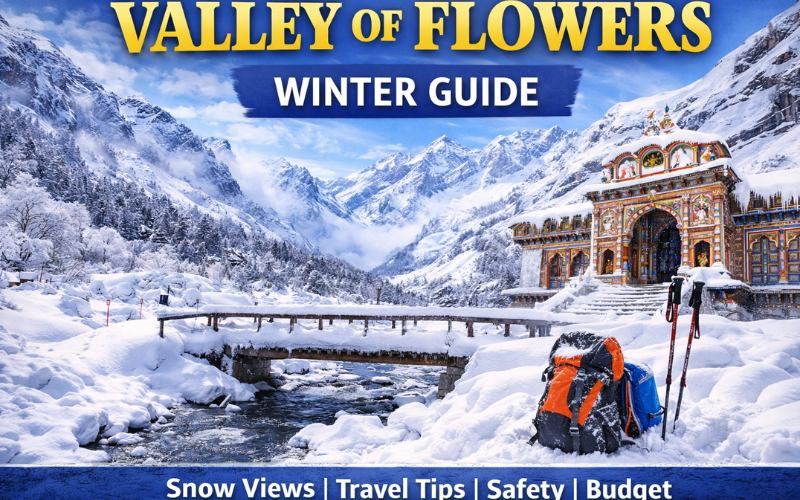

The valley of flowers in winter is mysterious and magical. Lush monastery covered in a blanket of thick snow becomes quiet Himalayan wonder This UNESCO World Heritage Site is simply transformed under a thick sheet of snow. Trekking has been closed, but winter continues to draw birders and photographers.
In addition, winter reveals a raw and undisturbed version of the valley. It is thus crucial to know the weather conditions, availability and safety while planning such a visit.
Why Valley of Flowers Looks Magical in Winter
In winter there is waist deep snow in the valley. Open spaces vanish, rivers partly freeze up and silence takes over. The area has a tranquil and untouched feel.
And the valley’s encircling Himalayan peaks appear crisper and brighter. That is why vistas of winter appear so exaggerated and otherworldly.
Valley of Flowers Winter: Is It Open or Closed?
Winter Accessibility Explained
Valley of flowers winter season The valley of flowers remains officially closed in the month of late October and from November to April. Heavy snowfall blocks trekking routes. So, you can’t enter into the valley.
However the nearby areas of Govind ghat, Joshimath and areas on Badrinath Highway accessible depending upon snowfall. So winter travel is more about near snow views rather than locating a valley to trudge through.
Valley of Flowers Winter Weather Conditions
The winter clime continues rough and uncertain.
- Temperature: –5°C to 7°C
- Snowfall: Heavy, December to February
- Visibility: Clear on sunny days
- Highway conditions: Could be temporarily closed
So, in winter, take flexibility and caution.
Valley of Flowers Winter: What You Can Actually See
While the valley remains closed, winter presents some rare opportunities.
Snow-Covered Landscapes
Snowfall covers forests, bridges and riverbanks. Winter photography is therefore a rewarding business.
Himalayan Views
With clear skies, peaks such as Nilgiri and Rataban stand in full view. Hence, panoramic views look stunning.
Frozen Streams
Water cascades decelerate or partially freeze. There it is that nature looks so quiet, pale.
Valley of Flowers Winter: How to Reach Nearby Areas
By Road
Govindghat is the last motorable point. If there is no heavy snow, the logistics of the road will keep open.
By Train
Rishikesh and Haridwar are the major railheads.
By Air
The closest airport in area is Jolly Grant Airport.
Road journey ahead to Joshimath after it.
Valley of Flowers Winter: Nearby Places to Explore
Valley of Flowers National Park
Though entry remains off-limits, outer views of snow scenery and silence are available.
Joshimath
Joshimath is a peaceful hill town located in the Chamoli district of Uttarakhand. It sits at an altitude of around 1,890 meters and serves as an important gateway to several famous Himalayan destinations. Because of its strategic location, Joshimath is often used as a base for traveling to Auli, Badrinath, Valley of Flowers, and Hemkund Sahib.
The town holds deep religious significance. Joshimath is one of the four sacred Maths established by Adi Shankaracharya, which makes it an important pilgrimage center for Hindus. Ancient temples and spiritual vibes can be felt throughout the town. Moreover, the presence of the Narasimha Temple adds cultural and religious value to the region.
Joshimath is also surrounded by natural beauty. Snow-capped Himalayan peaks, dense forests, and flowing rivers create a calm and refreshing environment. During winter, the town experiences cold weather, while summers remain pleasant and suitable for sightseeing. Because of this climate, Joshimath attracts travelers throughout the year.
Adventure lovers also find Joshimath appealing. Trekking routes, mountain trails, and ropeway access to Auli make it popular among nature and adventure enthusiasts. Additionally, the famous Auli ropeway starts from Joshimath and offers breathtaking views of the surrounding mountains.
Overall, Joshimath is a perfect blend of spirituality, nature, and adventure. It offers a peaceful stay, scenic surroundings, and easy access to some of Uttarakhand’s most beautiful destinations, making it an ideal stop for travelers exploring the Garhwal Himalayas.
Badrinath (Weather Permitting)
Badrinath remains locked for worship but the views outside in snow are stupendous.
Valley of Flowers Winter: Trekking Possibilities
Hiking inside of the valley is prohibited during winter months. But small treks into the snow around Joshimath and Auli are possible.
And always, for all snow sports we would urge you to have a professional instruction. Therefore, we should never put safety at a disadvantage.
Valley of Flowers Winter: Budget & Travel Cost
While off season demand prevents travel costs in the winter from being too high.
Approximate Cost (Per Person)
-
Travel: ₹4,000 – ₹7,000
-
Hotals: INR 1,500 – 3,500 per Night
-
Food: ₹800 – ₹1,200 per day
- Local transport: ₹1,000 – ₹2,000
This means a winter trip of 3–4 days may cost ₹8,000 to ₹15,000.
Food Availability in Winter
Basic North Indian food is to be had. Hot food is more than a necessity on cold days.
Popular winter food includes:
- Dal rice
- Aloo paratha
- Soup and tea
- Maggi
As a result, the daily basic food requirements are fulfilled.
Packing Essentials for Valley of Flowers Winter
Packing smartly can make a difference in terms of comfort and safety.
- Heavy woolens and jackets
- Snow shoes or trekking boots
- Gloves, caps, thermals
- Sunscreen and lip balm
- Torch and power bank
Hence, preparation becomes crucial.
Valley of Flowers Winter: Safety Tips
-
Avoid night travel
-
Check road conditions daily
-
Respect forest rules
-
Travel with buffer days
- Follow local advisories
And so, prudent planning guarantees the right of passage.
Best Alternative Time to Visit Valley of Flowers
If flowers and trekking are important, July to September is still best. At that time, thousands of alpine flowers are in bloom. So if you are going for the snow winter is your time and monsoon should be your season for a brewing nature obsession.
Final Thoughts
In the winter season of valley of flowers one can enjoy silence, snow beauty and the scenic view of Himalayas. While trekking is closed, winter uncovers a side to this famous destination that few others see. So if you like snow landscapes and isolation, patience for winter travels may still seem fruitful near the Valley of Flowers.