
Cultural travel immersion has become one of the most valuable ways for people to encounter the world. Travelers now look beyond sightseeing. Rather, a preference is for affiliations with local people, tradition and daily life. Travel does feel richer and slower and more personal in consequence.
They are not about checklists but rather improving understanding of the way people lives, eats, celebrates and communicates. Besides, when stories are told and traditions are lived out memories last even longer. Hence, the culture of travel makes an appeal to those who prefer depth over miles.
This is a book that proposes an exploration of what cultural travel really means; why it matters, and how the increasingly mobile human race can enjoy peak qualitative experiences for the mind, body, soul and spirit in situ wherever we go on this blue plannet (and beyond).
What Are Cultural Travel Experience?
And it matters the enrichment of your cultural travel experience counts on interaction with a local culture. These are stories that do not stop at monuments or landmarks. Instead, tradition, culture and day-to-day life are investigated.
Food is tasted where it’s born, for instance. Festivals are celebrated with locals. Art, music and rituals are treated with reverence. This, as a result, makes the journey educational and emotional.
Plus, cultural travel experiences open up the ability for travelers to see places as locals do. Consequently more is learned about the world.
Why Cultural Travel Experience Matter Today
Modern travel has changed rapidly. Tourists now want authenticity. This movement is driving the importance of cultural travel.
For one, cultural travel is what really sustains local people. Money flows into the hands of local guides, homestay proprietors and artisans. Second, traditions are cherished by being embraced. And finally, travelers return home with new perspectives.
(Moreover, cultural understanding leads to respect and tolerance. The upshot is that travel no longer becomes a luxury for the rich so much as another means to engage with the world beyond your door.
Types of Cultural Travel Experience Around the World
Cultural travel can come in many different ways. Each kind also provides a distinctive way to interact with a destination.
Cultural Travel Experience Through Local Food
Food connects people instantly. Henceforth culinary experiences are big part of cultural travel.
Street food tours, home cooking, and classic cooking classes are also popular. In addition, recipe backstory is history and heritage. Spices, techniques and ingredients serve as signposts of climate and culture, for example.
In due course, food becomes a window into a place.
Cultural Travel Experience Through Festivals and Celebrations
Festivals bring culture to life. Colors, music, rituals and emotions seamlessly blend in. This is precisely why festivals are one of the most impactful cultural travel experiences.
Tourists who travel for local festivals feel included in communities. Beyond this, seasonal festivals indicate agricultural seasons and practices, religious beliefs and historical events.
For this reason, festivals leave memories that are hard to forget.
Cultural Travel Experiences in Historic Cities
Old cities have the layers of culture worked over centuries, to discover. Streets, buildings and marketplaces are filled with silent narratives.
Cities such as Rome, Kyoto, and Varanasi are instances where living cultures and history live side by side.
Many also prefer walking tours, local storytelling and heritage walks. So history is something lived, not something learned.
Cultural Travel Experiences in Rural Communities
The most authentic travelling experiences culturally are often in the country. Life in the villages turns at a slower pace, and traditions are strong.
Travelers engage in agriculture, craft making and daily tasks. What is more is that local hospitality seems real and warm. And as a result, connections feel personal not transactional.
Villages are invited to have homestays that promote cultural exchange both ways. Thus, rural cultural tourism contributes to as much giving by the hosts as receiving by the guests.
Cultural Travel Experiences Through Art and Handicrafts
Art is the soul of a civilization. Identity and history are expressed in paintings, textiles, pottery and carvings.
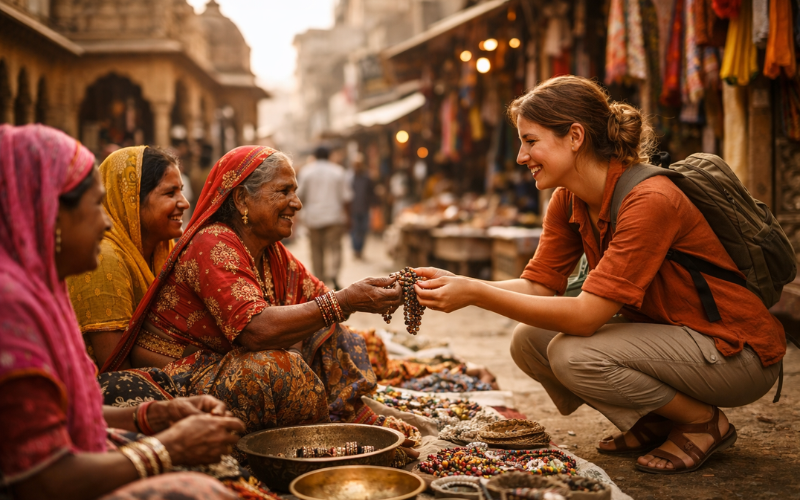
Local craftsmen and women workshops are becoming more and more popular. Travelers are ‘schooled’ while being given insight into traditions handed down generations. Also, handmade souvenirs have emotional value.
So, travel and cultural experiences based on art enhance creation and heritage.
Cultural Travel Experiences Through Music and Dance
There is no language in dance or music which expresses emotions. Rhythms are the means by which all cultures express joy, sadness and celebration.
There are flamenco shows in Spain, classical dancing in India – where ever you go there is something that is most wonderful whether it being music or art. It’s also the energy of a live show vs. watching something recorded!
Hence music and dance are integral parts of cultural submersion.
Cultural Travel Experiences for Responsible Travelers
The notion of responsible travel and cultural experiences are interconnected. Courtesy to tradition, dress and customs is a must 9.
Travelers should observe before participating. Asking questions in a polite manner will help avoid misunderstandings. Besides, photography should be done by permission, always.
It is due to this respectful concept that cultural exchanges are kept positive and significant.
Cultural Travel Experiences for Solo Travelers
The lone traveler commonly is looking for more than connections. Cultural travel experiences are tailor made for them.
I like the natural pace of local interactions in solo travel. Then there were the workshops, walking tours and homestays to foment social interaction.
The result is, solo travelers go home with friends and memories rather than just a bunch of pictures.
Cultural Travel Experiences for Families
Cultural travel is also great for families. This is how children learn empathy, history and exposure to diverse experiences.
Hands-on tasks like cooking, crafts and festivals maintain the interest of girls. Beyond that, shared learning is a wonderful way to family ties.
Thus, cultural travel experiences make educational holidays for folks of all ages.
How to Plan Cultural Travel Experiences Successfully
Planning cultural travel requires intention. Rushed schedules should be avoided. Fewer places for longer is, instead, the ideal.
You should prefer going with local guides, rather than on mass tours. Also, local guesthouses have more culture to offer.
Researching customs beforehand also helps. So people are feeling prepared and respectful.
Destinations Known for Cultural Travel Experiences
There are hundreds of culture-packed journeys to be found in destinations across the globe.
- India – culture, festivals, spi…rituality food and heritage.
- Japan – culture, tradition and the quest for perfection
- Morocco – souks, crafts and architecture.
- Peru – history and ancient culture prevalent Due to its legendary Inca civilization, the history of Peru is inexhaustible.
The opportunities for cultural travel experiences affected by history and people are as varied as the places you’ll visit.
Cultural Travel Experiences vs Traditional Tourism
Traditional tourism focuses on attractions. Cultural travel focuses on connections.
While sightseeing and shows are about places, cultural experiences reveal stories. Moreover, engagement replaces observation. As a result, travel seems to leave me fuller.
So, it seems some travelers would rather experience as opposed to check lists.
Challenges in Cultural Travel Experiences
Cultural misunderstandings can happen. Misunderstandings can arise due to language and cultural differences.
But patience and willingness solve almost anything. It also helps to learn some basic local phrases. Additionally, flexibility allows smoother interactions.
So, obstacles usually turn into learning experiences.
Future of Cultural Travel Experiences
The future of travel is experiential. Increasingly, travelers have been seeking authentic and sustainable experiences.
Digital fatigue has a follow-up effect: It makes people want interaction with other humans. So cultural travel experiences are going to get even more popular.
Slow travel, community-based tourism and heritage conservation will define your next trips.
Final Words: Why Cultural Travel Experience Change You
Cultural travel experiences are more than a display of new places. They influence the way we view the world, build empathy, and leave lifelong impressions.
Through food, festivals, traditions and people we all feel that much closer together. And travelers return home, not only relaxed, but enriched.
If fulfilling travel is the objective, then experiential cultural travel is the most rewarding route. Trips may come to an end, but cultural ties last forever.